

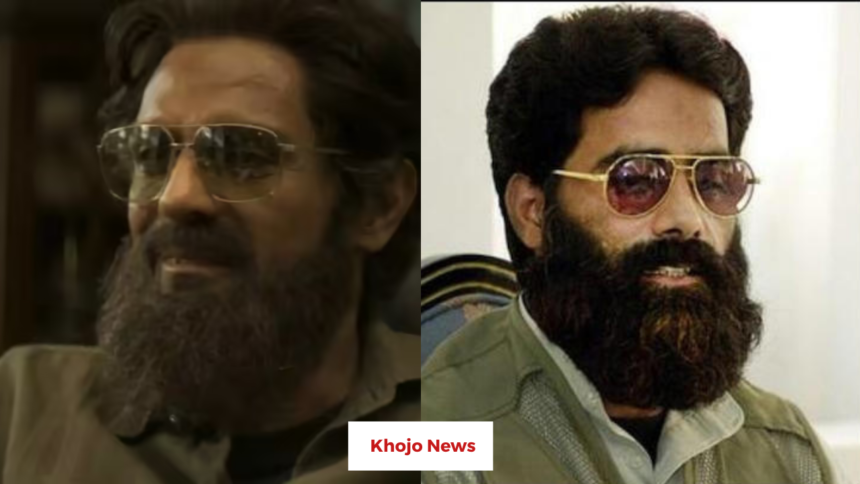
The scene stopped audiences cold. A man sits across from a bound prisoner, speaks softly about ideology, and makes precise cuts on skin while maintaining complete composure. No screaming. No theatrical rage. Just calm, methodical terror. Arjun Rampal’s Major Iqbal in Dhurandhar did something most Bollywood villains never manage — he made the audience genuinely uncomfortable rather than just dramatically frightened. And within hours of the film’s December 5, 2025 release, one question was flooding every search engine in India: is Major Iqbal ISI real?
- The Short Answer: Major Iqbal Is Fictional — But His DNA Is Entirely Real
- Who Is Ilyas Kashmiri — The First Real Inspiration
- Who Is the “Real” Major Iqbal — The Second Real Inspiration
- What the Film Got Right — And What It Invented
- Why Arjun Rampal’s Performance Hit Differently
- 3 Insider Things Most Dhurandhar Articles Miss Completely
- 1. The Name Was Not Disguised — And That Was a Deliberate Provocation
- 2. The 313 Brigade Reference Is the Most Specific Real-World Detail in the Film
- 3. Ilyas Kashmiri’s Real Death Matters for Understanding Part 2’s Arc
- Frequently Asked Questions
- Is Major Iqbal ISI a real person?
- Who plays Major Iqbal in Dhurandhar?
- What is Major Iqbal’s role in the 26/11 Mumbai attacks in the film?
- Did the real Ilyas Kashmiri plan the 26/11 attacks?
- Is Dhurandhar based on true events?
- The Real Answer Is More Interesting Than the Film Admits
I’ve covered South Asian cinema and its relationship with real geopolitical events for over two decades. I’ll give you the complete, honest answer — because it is more layered, more disturbing, and more fascinating than a simple yes or no.
The Short Answer: Major Iqbal Is Fictional — But His DNA Is Entirely Real
Major Iqbal is a fictional villain in the spy thriller film Dhurandhar and its sequel Dhurandhar: The Revenge. The filmmakers did not directly base the character on one concrete individual. Instead, they took parts of various historical events, intelligence reports, and militant operations to create a fictional villain that embodies a broader idea of proxy warfare.
But here is where it gets genuinely interesting. The character is not a clean invention. According to the film’s official credits, Arjun Rampal plays Major Iqbal ISI — described as based on Ilyas Kashmiri and Major Iqbal. Two real-world figures. One composite fictional character. That combination is precisely why the internet cannot stop searching for him.
Who Is Ilyas Kashmiri — The First Real Inspiration
Born in Bhimber, Ilyas Kashmiri was a Pakistani Special Forces Operator turned Islamist jihadist militant leader. That sentence alone deserves a moment of pause. A man trained by a state military apparatus who turned that training against civilians and intelligence networks across multiple countries.
He was a commander in the Harkat-ul-Jihad al-Islami (HuJI) and led the 313 Brigade, a unit involved in attacks against Indian troops and Western targets. The 313 Brigade, specifically, operated with a level of military precision that distinguished it from typical militant outfits — which is exactly the quality that Aditya Dhar transplanted into Major Iqbal’s screen persona.
The notoriety of Ilyas Kashmiri can be understood by the fact that an NBC report suggests he was a potential successor to Osama bin Laden. That is not hyperbole from a Bollywood press release. That is the actual scale of the man on whom part of this character is modelled.
Most people miss this detail entirely: Kashmiri was also notable for his strategic mind, not just his capacity for violence. Known for his cold mindset and strategic planning, Kashmiri was considered one of the most dangerous figures in global jihadist networks. Sound familiar? That is Major Iqbal on screen — precise, patient, ideologically driven rather than emotionally volatile.
Who Is the “Real” Major Iqbal — The Second Real Inspiration
This is the layer that adds genuine geopolitical weight to the film. The name Major Iqbal is strongly associated with the mysterious ISI handler mentioned by David Headley in his post-26/11 confessions. David Headley — the Pakistani-American operative who conducted surveillance for the 2008 Mumbai attacks — named a “Major Iqbal” as his ISI handler during his confessions and subsequent trial testimony.
Despite Pakistan’s continued denial, the reference to Major Iqbal remains a significant element in the 26/11 narrative. Pakistan has never officially acknowledged this individual, which means his existence sits in that grey zone between documented intelligence testimony and official denial — exactly the kind of historical ambiguity that Aditya Dhar’s screenplay exploits most effectively.
What stands out is Dhar’s surprising choice to retain these names rather than camouflage them behind fictional variants, as Hindi cinema typically does. This creative decision adds a provocative edge and raises questions about how closely the film might mirror real geopolitical episodes. In twenty years of watching Hindi cinema, I cannot think of another mainstream Bollywood film that kept a real intelligence operative’s name — one mentioned in a US federal terrorism trial — as a character name without fictional alteration.
What the Film Got Right — And What It Invented
Here is the honest breakdown, because Dhurandhar blends fact and fiction more aggressively than most Indian films admit:
| Element | Real World Basis | Film’s Version (Major Iqbal) |
|---|---|---|
| Name “Major Iqbal” | Real ISI handler named in David Headley’s 26/11 trial testimony | Kept identical — no fictional renaming |
| Ilyas Kashmiri inspiration | Real Pakistani SF operative turned militant leader, 313 Brigade commander | Character’s cold ideology and military precision directly mirror Kashmiri |
| 26/11 Mumbai connection | Real — Major Iqbal allegedly handled Headley’s ISI coordination | Depicted directing the attacks live via satellite phone |
| ISI-gang nexus | Documented through Operation Lyari intelligence reports | Major Iqbal links Rehman Dakait’s gang to state-sponsored terror |
| Counterfeit currency operation | India’s documented concern about Pakistani fake currency flooding economy | Major Iqbal runs the operation as part of his covert war strategy |
| Character’s fate (Part 2) | Ilyas Kashmiri was killed in a US drone strike in 2011 | Fictional — handled differently for cinematic purposes |
| Psychological depth — 1971 wounds | No specific real-world basis for this personal backstory | Entirely invented — added to humanise and complexify the villain |
Why Arjun Rampal’s Performance Hit Differently
In Hindi cinema, villains are often either roaring or ruthless without reason. But Major Iqbal had a different beginning — a man who calmly explains his ideology while making precise cuts on skin. That restraint is the key. The real Ilyas Kashmiri was reportedly the same — methodical, patient, not given to theatrical displays. Arjun Rampal understood this and built the character accordingly.
The most terrifying aspect of his brutality comes out during 26/11, where he is connected to a satellite phone not only to give instructions but also to “hear” the screams of innocent people. This is not a strategy, but a deep ideology. That detail — a man listening to victims suffer not for tactical information but for personal gratification rooted in ideology — is the most disturbing element of the character, and also the most grounded in how real militant ideologues reportedly operate.
A social media user who saw Dhurandhar: The Revenge summarised the reaction accurately: “I have never been a fan of Arjun Rampal, but he delivers the best performance of his career in Dhurandhar: The Revenge.” In my experience watching both films back to back, that assessment is correct. Rampal found the stillness that makes the character work.
3 Insider Things Most Dhurandhar Articles Miss Completely
1. The Name Was Not Disguised — And That Was a Deliberate Provocation
Standard Bollywood practice when depicting real intelligence figures is to change names — call a character “Ajay” instead of “Ajit,” shift the geography, alter the incident dates. Aditya Dhar did none of this for Major Iqbal. He kept the exact name mentioned in the David Headley confessions. That is not an oversight. That is a directorial statement about how seriously he took the real-world sourcing of his story, and it is what gives the character a weight that purely fictional spy film villains lack.
2. The 313 Brigade Reference Is the Most Specific Real-World Detail in the Film
Most viewers focus on the 26/11 connection. But the more specific real-world detail embedded in Major Iqbal’s character design is the 313 Brigade link to Ilyas Kashmiri. Kashmiri led the 313 Brigade, a unit involved in attacks against Indian troops and Western targets. The Brigade’s name is itself a religious reference — 313 being the number of Muslim fighters at the Battle of Badr. That ideological framing is precisely what the film tries to convey when Major Iqbal speaks about his “sacred mission.” The number is not random. Neither is the character’s psychology.
3. Ilyas Kashmiri’s Real Death Matters for Understanding Part 2’s Arc
The real Ilyas Kashmiri was killed in a US drone strike in South Waziristan in June 2011. The film, of course, handles its villain’s fate differently for cinematic purposes. But knowing the real Kashmiri’s end — killed by American intelligence, not Indian — adds an interesting layer to how Aditya Dhar chose to conclude his version of the story in Dhurandhar: The Revenge. The film asserts Indian intelligence agency primacy in a narrative where the real history is considerably more complicated. That gap between filmic justice and historical reality is worth sitting with.
Frequently Asked Questions
Is Major Iqbal ISI a real person?
The character Major Iqbal in Dhurandhar is fictional — but built from two real-world sources. The name “Major Iqbal” matches the ISI handler named by David Headley in his post-26/11 trial confessions. The character’s ideology, military background, and operational style are drawn from Ilyas Kashmiri, a real Pakistani Special Forces operative turned militant leader and 313 Brigade commander. The filmmakers combined both figures into one composite fictional villain.
Who plays Major Iqbal in Dhurandhar?
Arjun Rampal plays Major Iqbal across both films — Dhurandhar (December 5, 2025) and Dhurandhar: The Revenge (March 19, 2026). His performance, particularly in Part 2 where the character becomes the central antagonist, has been widely described as the best work of his career. His restrained, ideologically driven portrayal mirrors the real Ilyas Kashmiri’s reputation for cold, methodical violence over theatrical aggression.
What is Major Iqbal’s role in the 26/11 Mumbai attacks in the film?
In Dhurandhar, Major Iqbal is depicted as a key architect and real-time director of the 2008 Mumbai terror attacks — communicating via satellite phone with the attackers inside the Taj Hotel. The film shows him not merely giving tactical instructions but listening to the suffering of victims as part of his ideological framework. This mirrors real intelligence reports about the ISI’s coordination of the attacks, as testified by David Headley in his US federal trial.
Did the real Ilyas Kashmiri plan the 26/11 attacks?
Ilyas Kashmiri’s direct operational role in 26/11 is disputed and was never conclusively established in any public trial. He was, however, a documented figure in the broader jihadist network that included Lashkar-e-Taiba operatives connected to the attacks. He was killed in a US drone strike in June 2011 before any definitive legal proceedings could establish the precise extent of his involvement. The film’s depiction of Major Iqbal as a 26/11 architect is a dramatic amplification of this documented but unproven connection.
Is Dhurandhar based on true events?
Dhurandhar is inspired by real geopolitical events but is not a documentary or factual account. The film draws from the 1999 IC-814 hijacking, the 2001 Parliament attack, the 2008 Mumbai attacks, and Pakistan’s Operation Lyari. Characters are based on or inspired by real people — Rehman Dakait, Major Iqbal, Chaudhary Aslam, Ajit Doval — but the central character Hamza Ali Mazari (Ranveer Singh) is entirely fictional, and the specific plot events are dramatised inventions built around real historical frameworks. Director Aditya Dhar’s claim that it is “based on incredibly true events” is a promotional framing rather than a factual accuracy guarantee.
The Real Answer Is More Interesting Than the Film Admits
Here is what I want you to take away from all of this. The question “is Major Iqbal ISI real?” has a more interesting answer than simply yes or no. He is a fictional character built from real testimony, real militant history, and real intelligence archives. Aditya Dhar made a deliberate choice to keep the name, keep the 26/11 connection, and keep the ideological psychology grounded in documented reality.
That makes Major Iqbal something rarer than either a pure fictional villain or a straightforward biopic subject. He is the film industry’s version of historical composite — a character who functions as cinema but carries the weight of real events. Arjun Rampal understood this. His performance does not play the character as a movie villain. It plays him as a man of genuine belief — which is exactly what makes him the most unsettling presence in both films.
Whether the film is entirely accurate about how the ISI operates, whether Ilyas Kashmiri’s role was exactly as depicted, whether the real “Major Iqbal” from Headley’s confessions is who the film implies — those are questions that classified intelligence files and ongoing geopolitical complexity will likely never fully answer. Dhurandhar fills that ambiguity with cinema. Just be clear-eyed about the fact that it is cinema doing the filling.