
| Name | Sonagachi (Bengali: সোনাগাছি — “Tree of Gold”) |
| Location | North Kolkata — near intersection of Chittaranjan Avenue, Shyambazar Beadon Street, close to Marble Palace |
| Area Type | Asia’s largest red-light district |
| Estimated Sex Workers | 11,000–16,000 in Sonagachi; 28,000+ across West Bengal through DMSC |
| Origin (Name) | Named after Sufi saint Sona Ghazi — whose tomb (mazaar) is located in the locality |
| History | Red-light activity traced to British colonial era — 150+ years |
| Key Organisation | Durbar Mahila Samanwaya Committee (DMSC) — founded 1992, formalised 1995 |
| DMSC Members | 60,000–65,000 sex workers across West Bengal |
| HIV Rate (Sonagachi) | ~5.17% — significantly below many urban Indian centres; reduced from ~11% in early 1990s |
| DMSC Free Clinics | 51 across West Bengal |
| Schools for Children | 17 non-formal schools + 2 hostels run by DMSC |
| Oscar-Winning Documentary | Born into Brothels (2004) — Academy Award for Best Documentary |
| India’s Legal Status | Sex work itself not illegal under Indian law — brothel-keeping, pimping, and trafficking are illegal under ITPA |
| DMSC Key Demand | Full decriminalisation of sex work; recognition as legitimate labour |
In 1992, a public health scientist named Smarajit Jana walked into Sonagachi with a simple idea — let sex workers run their own HIV prevention programme instead of imposing one from outside. The experts said it wouldn’t work. The moral crusaders said it was complicity. The community organisers just got on with it.
- How Sonagachi Became What It Is — The History
- The Durbar Mahila Samanwaya Committee — A Movement Built From Inside
- The Ground Reality — What Life in Sonagachi Actually Looks Like
- The Law, The Debate & What India Still Gets Wrong
- 3 Things Most Articles About Sonagachi Get Wrong
- FAQ — What People Are Actually Searching About Sonagachi
Three decades later, Sonagachi’s HIV rate had dropped from roughly 11% to below 5%. Police brutality incidents had fallen by 90%. A 60,000-strong collective of sex workers had held India’s first national sex workers’ convention. And a community that India had spent 150 years pretending didn’t exist had built a self-governing neighbourhood with its own clinics, schools, courts, and cooperative bank.
The story of Sonagachi is not the story of a red-light area. It is the story of what happens when a marginalised community stops waiting for rescue and builds its own power instead.
How Sonagachi Became What It Is — The History

The name “Sonagachi” comes from one of two competing origin stories. The more commonly cited one traces it to a Sufi saint — Sona Ghazi — whose mazaar (tomb) is located in the locality. The word “Ghazi” means a warrior who helps spread Islam; over time, “Sona Ghazi” became “Sonagachi.” In Bengali, the words also translate loosely to “Tree of Gold.”
The area’s connection to commercial sex work dates to the British colonial era — at least 150 years of documented history. Sonagachi sits in North Kolkata near Chittaranjan Avenue and the Marble Palace, in what was historically a commercial and transient neighbourhood. Colonial-era cities across Asia typically developed red-light districts near trading routes, pilgrimage corridors, and military cantonments. Kolkata had all three.
What the headlines miss is that Sonagachi’s population is not locally born. The majority of women working there come from West Bengal’s poorest rural districts, from neighbouring states like Bihar, Odisha, and Rajasthan, and from Bangladesh and Nepal. Trafficking — through false promises of employment, education, or marriage — is the documented entry route for a significant number. Others come by economic necessity after abandonment, widowhood, or domestic violence left them without any other visible option.
The Durbar Mahila Samanwaya Committee — A Movement Built From Inside
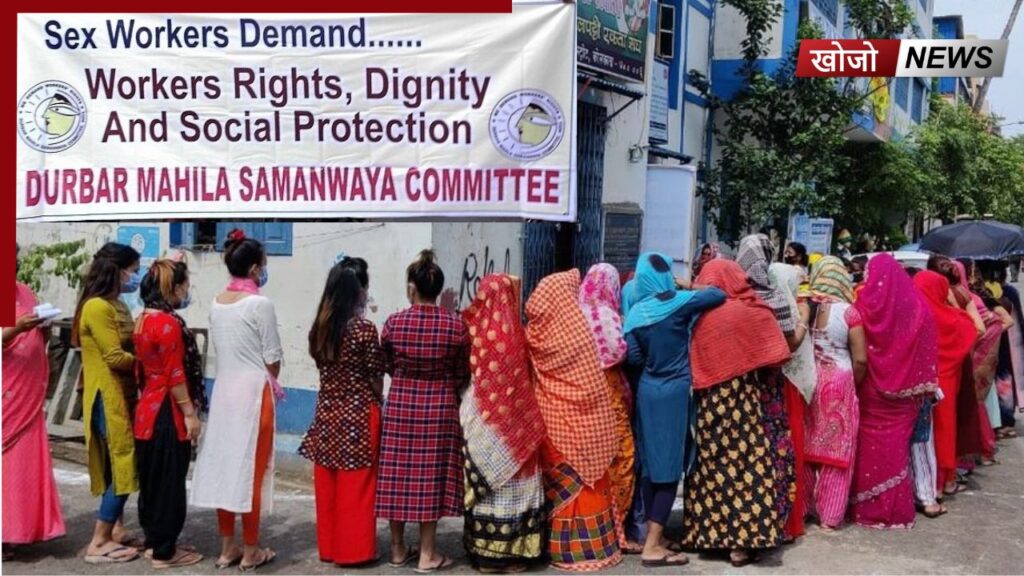
The most important thing to understand about Sonagachi in 2026 is that it has a functioning, community-led governance structure that most Indian villages do not have. That structure is the Durbar Mahila Samanwaya Committee — DMSC — and its story is one of the most remarkable examples of community organising in modern India.
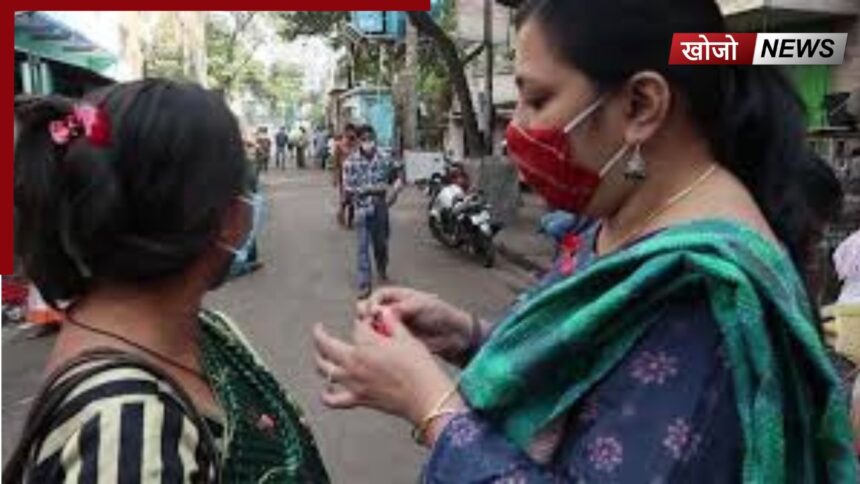
DMSC was formally established in 1995, growing out of the Sonagachi Project — an STD/HIV intervention programme initiated in 1992 by the All India Institute of Hygiene and Public Health. The key innovation was peer-led health education. Instead of outside health workers telling sex workers what to do, the programme trained sex workers to educate each other. The results were immediate and measurable.
By the mid-2000s, Sonagachi’s consistent condom use rate had reached 95%. HIV prevalence had dropped from roughly 11% to below 5.17%. UNAIDS cited the Sonagachi model as a global case study in successful community-led HIV prevention. The model was replicated in six Indian states and influenced India’s National AIDS Control Programme policies directly.
In 1997, DMSC hosted India’s first national convention of sex workers — titled “Sex Work is Real Work: We Demand Workers Rights.” That convention, held in Kolkata, was the first time Indian sex workers had organised at national scale under a rights-based rather than welfare-based framework. The distinction matters: welfare says we will help you; rights says we are equal citizens who demand what belongs to us.
As of 2025–2026, DMSC runs 51 free clinics across West Bengal, 17 non-formal schools for children of sex workers, 2 children’s hostels, and the Usha Multipurpose Co-operative Society — a microfinance institution with over 5,000 registered sex worker members providing savings, loans, and alternative livelihood support.
The Ground Reality — What Life in Sonagachi Actually Looks Like
Every room in Sonagachi’s multi-storey brothels is approximately 50–100 square feet. Six people live in each room. The beds are raised — children sleep beneath them while their mothers work above, or wait outside through the night and attend school the next morning as if nothing happened.
The lanes are narrow, the architecture is 150 years old, and the lack of sanitation infrastructure is one of the area’s persistent challenges. Community clubs — often controlled by local strongmen — are the social infrastructure of the neighbourhood. NGOs and health organisations have learned to enter through these clubs rather than by confronting them.
I’ve seen this pattern repeat across India’s marginalised urban communities — the most effective interventions are always the ones that work through existing social structures rather than trying to replace them. Organisations like South Kolkata Humari Muskan (SKHM), working in Sonagachi since 2011, began with children’s education precisely because it gave them a non-threatening entry point before expanding to work with mothers on livelihoods and health.
The economic arithmetic is stark. A sex worker in Kolkata earns approximately ₹300 per encounter — compared to ₹1,578 in Thailand and ₹8,557 in the United States. The informal nature of the work means no labour protections, no pension, no insurance, no formal credit access, and no social security — regardless of how many years a woman has worked.
| Category | Before DMSC (Pre-1992) | After DMSC (2026) |
|---|---|---|
| HIV Prevalence | ~11% in early 1990s | ~5.17% — one of India’s lower rates |
| Condom Use | Minimal — clients routinely refused | 95% consistent use among DMSC members |
| Police Brutality Incidents | Frequent — no accountability | Reduced by 90% — community-run dispute boards |
| Children’s Education | No structured provision | 17 non-formal schools + 2 hostels |
| Healthcare Access | Practically none | 51 free clinics across West Bengal |
| Financial Inclusion | Entirely dependent on moneylenders | Usha Co-operative Society — 5,000+ members |
| Legal Advocacy | No organised voice | National conventions, Supreme Court petitions, policy influence |
The Law, The Debate & What India Still Gets Wrong
India’s legal position on sex work is one of the world’s most confused. Sex work itself is not illegal under Indian law. What is illegal under the Immoral Traffic (Prevention) Act (ITPA) is brothel-keeping, pimping, soliciting in public, and living off the earnings of a sex worker. The practical effect is that sex workers can technically “work” legally but cannot do so in any organised, safe, or protected way — making the law effectively more punitive than an outright ban.
In 2022, the Supreme Court of India ruled that sex workers are entitled to equal protection of the law and directed that police cannot arrest or penalise sex workers for practising their profession voluntarily. That ruling was significant. Enforcement has been inconsistent. The NCRB recorded approximately 6,500 cases under ITPA annually as of 2022 — demonstrating continued criminalisation in practice even as courts move towards rights recognition.
DMSC’s demand is full decriminalisation — not legalisation, which implies state licensing and control, but decriminalisation, which removes criminal penalties entirely and allows the community to self-regulate. The New Zealand model — Prostitution Reform Act 2003 — is their global reference point. India’s policy remains, in DMSC’s own words, “ambivalent — progressive judicial recognition versus criminalising laws.”
3 Things Most Articles About Sonagachi Get Wrong
1. Sonagachi is not a monolith — it has an internal class structure. The red-light areas of Kolkata, including Sonagachi, are divided into four socioeconomic classes — poor, lower, middle, and rich — based on location, building quality, and client profile. This internal stratification is almost never mentioned in coverage that treats the area as a single undifferentiated “district.” The experiences of women at different levels of this hierarchy differ significantly.
2. The DMSC’s success on HIV is real — but the trafficking problem inside Sonagachi is also real and unresolved. Both things are true simultaneously. The book Half the Sky by Nicholas Kristof and Sheryl WuDunn documented evidence that DMSC-linked brothels included trafficking victims and underage girls — something DMSC contested but which independent investigations corroborated in parts. Holding both realities at once — genuine community empowerment and persistent trafficking — is the only honest way to understand Sonagachi.
3. “Born into Brothels” is not a straightforward celebration of Sonagachi’s children. The 2004 Oscar-winning documentary, while moving, was criticised by DMSC and community members for presenting the children as entirely without agency and for not fully representing the women’s rights work already underway. Some of the children photographed said they felt their lives were depicted as more hopeless than they experienced them. The film is important — but it is one perspective, not the whole story.
“For the broader picture of how India’s marginalised communities are represented — or not — in Parliament, read our data breakdown: How Many Indian MPs Have Criminal Cases — 2026 Data.”
FAQ — What People Are Actually Searching About Sonagachi
Where is Sonagachi in Kolkata?
Sonagachi is located in North Kolkata, near the intersection of Chittaranjan Avenue and Beadon Street, close to the Marble Palace and Shyambazar. It is in one of the oldest parts of the city — an area with over 150 years of continuous habitation and commercial activity. It is accessible by metro (Shyambazar station) and by bus from central Kolkata.
How many sex workers are in Sonagachi?
Estimates vary across sources — figures range from 7,000 to 16,000 sex workers based in Sonagachi itself, with the DMSC’s broader West Bengal network associating approximately 28,000–65,000 sex workers depending on the scope of the survey. The variation reflects different definitions, survey methodologies, and whether “associated” includes those not currently active.
Is prostitution legal in India?
Sex work itself is technically not illegal under Indian law. However, the Immoral Traffic (Prevention) Act (ITPA) makes brothel-keeping, pimping, soliciting in public, and living off a sex worker’s earnings illegal — creating a situation where sex workers can legally “work” but cannot do so safely or collectively. The Supreme Court in 2022 ruled that sex workers are entitled to full legal protection and cannot be penalised for voluntary practice of their profession.
What is the Durbar Mahila Samanwaya Committee?
The Durbar Mahila Samanwaya Committee (DMSC) — “Unstoppable Women’s Synthesis Committee” in Bengali — is a collective of 60,000–65,000 sex workers in West Bengal, founded in Sonagachi in 1995. It runs 51 free health clinics, 17 schools for children of sex workers, a cooperative bank, and advocates for full decriminalisation of sex work in India. It is one of the world’s largest and most successful community-led sex worker organisations.
What is the documentary about Sonagachi that won an Oscar?
Born into Brothels: Calcutta’s Red Light Kids (2004), directed by Zana Briski and Ross Kauffman, won the Academy Award for Best Documentary Feature. It depicts the lives of children born to sex workers in Sonagachi and follows a photography programme that taught the children to document their own world. The film generated significant international attention but was also critiqued by community members and DMSC for its framing of the children’s lives.
Sonagachi is many things simultaneously — one of Asia’s largest red-light districts, one of India’s most successful community health experiments, a site of ongoing trafficking and poverty, and the birthplace of the most significant sex workers’ rights movement this country has produced. None of these descriptions cancels the others.
What the area’s 150-year history ultimately shows is that the question India keeps avoiding — whether to decriminalise, regulate, or continue the current ambiguous half-criminalisation — has real human consequences every day it goes unanswered. The women of Sonagachi have been living those consequences for longer than most of us have been alive.