
| Election Name | West Bengal Legislative Assembly Election 2026 |
| Total Seats | 294 (Majority mark: 148) |
| Phase 1 Voting | April 23, 2026 — 152 constituencies |
| Phase 2 Voting | April 29, 2026 — 142 constituencies |
| Result Date | May 4, 2026 |
| Total Eligible Voters | 7.04 crore (70,459,284) |
| Incumbent CM | Mamata Banerjee (TMC) — seeking 4th consecutive term |
| Opinion Poll Projection (VoteVibe/CNN-News18) | TMC: 184–194 seats | BJP: 98–108 seats |
| CM Preference (VoteVibe Poll) | Mamata Banerjee: 48.5% | Suvendu Adhikari: 33.4% |
| Key Battleground Seat | Bhabanipur — Mamata vs Suvendu Adhikari direct fight |
On March 15, 2026, the Election Commission of India dropped the Bengal election schedule — and within hours, Suvendu Adhikari announced he would contest directly against Mamata Banerjee in her own Bhabanipur fortress. That single move told you everything about where BJP’s confidence level actually sits. Because challenging Mamata in Bhabanipur, where she won the 2021 bypoll with 71.9% of the vote, is either the boldest political gamble of the decade — or a sign that BJP still hasn’t found a real answer to the question Bengal has been asking since 2011: who replaces her?
- The Numbers — What Polls Say and What They Miss
- BJP’s Real Problem — No CM Face, No Alternative Story
- The SIR Controversy — BJP’s Wildcard or TMC’s Grievance?
- The Bhabanipur Battle — Symbol More Than Seat
- 3 Things Most Articles Get Wrong About Bengal 2026
- FAQ — What Everyone Is Searching About Bengal 2026
After 20 years of covering Indian state politics, I can tell you that West Bengal 2026 is the most genuinely unpredictable major election India has seen in years. Not because the polls say it’s close — they don’t. But because the structural forces underneath the numbers are shifting in ways that one opinion poll cannot capture.\
The Numbers — What Polls Say and What They Miss
The VoteVibe-CNN News18 poll released on March 23, 2026 projects TMC winning 184–194 seats — comfortably above the 148-seat majority mark. Mamata’s CM preference score sits at 48.5% against Suvendu Adhikari’s 33.4%. On paper, this looks like a comfortable TMC win.
Most people get this wrong, but the seat projection hides a fragile vote share story. TMC’s projected vote share is 41.9% — against BJP’s 34.9%. That is a gap of just 7 percentage points. In 2021, TMC won 215 seats with 47.9% vote share. They’ve dropped 6 percentage points. In first-past-the-post elections, a 6-point swing can flip dozens of seats. The number most articles don’t mention is this: in Bengal’s 2021 election, 77 seats were decided by margins under 5,000 votes. Even a modest swing in those constituencies flips the outcome entirely.
The welfare architecture is Mamata’s most durable weapon. Programmes like Lakshmir Bhandar (monthly financial assistance to women), Kanyashree, and Swasthya Sathi health insurance have created a direct dependency relationship between millions of voters and the TMC government. Women voters — who form 48.8% of Bengal’s electorate — show disproportionately high TMC support. In eastern states where welfare dependency is high, voters historically prefer continuity. That’s a structural advantage no opposition can easily overcome in a single election cycle.
BJP’s Real Problem — No CM Face, No Alternative Story
Bengal votes differently from the rest of India. Here, people vote for the Chief Minister candidate first, the party second. Mamata says it herself openly: “Don’t think who is standing from your constituency, think of me and vote.” It works because 15 years of governance have made her the brand, not TMC.
BJP’s central problem in 2026 is the same one they had in 2021. They do not have a credible Bengal CM face. Suvendu Adhikari is the strongest they have — but he is a TMC defector, not an organic BJP leader. In my experience covering defector politicians, they carry two-sided credibility damage: TMC voters see them as traitors, BJP voters see them as opportunists. Neither base is fully enthusiastic.
Internal infighting — cited by 19.9% of poll respondents as BJP’s biggest weakness — is not a media narrative. It is a ground reality visible in candidate list negotiations, where four separate lists were released with replacements, which signals internal chaos rather than strategic cohesion.
The SIR Controversy — BJP’s Wildcard or TMC’s Grievance?
What the headlines miss is the scale of what the Special Intensive Revision of electoral rolls actually did in Bengal. From a pre-SIR electorate of approximately 7.6 crore, the process deleted 58 lakh names, placed another 60 lakh under adjudication, and as of late March 2026, approximately 28 lakh cases were still unresolved. The Supreme Court had to intervene, directing 700 judicial officers to adjudicate the contested cases.
TMC and the opposition allege the SIR disproportionately deleted Muslim and minority voters. The Election Commission denies political motivation. The truth — and I’ve watched enough Indian elections to say this — is that both are partially right. Voter roll revision always creates friction. The scale of this particular revision, three weeks before polling, created genuine anxiety that suppressed pre-election energy across the state.
The Bhabanipur Battle — Symbol More Than Seat
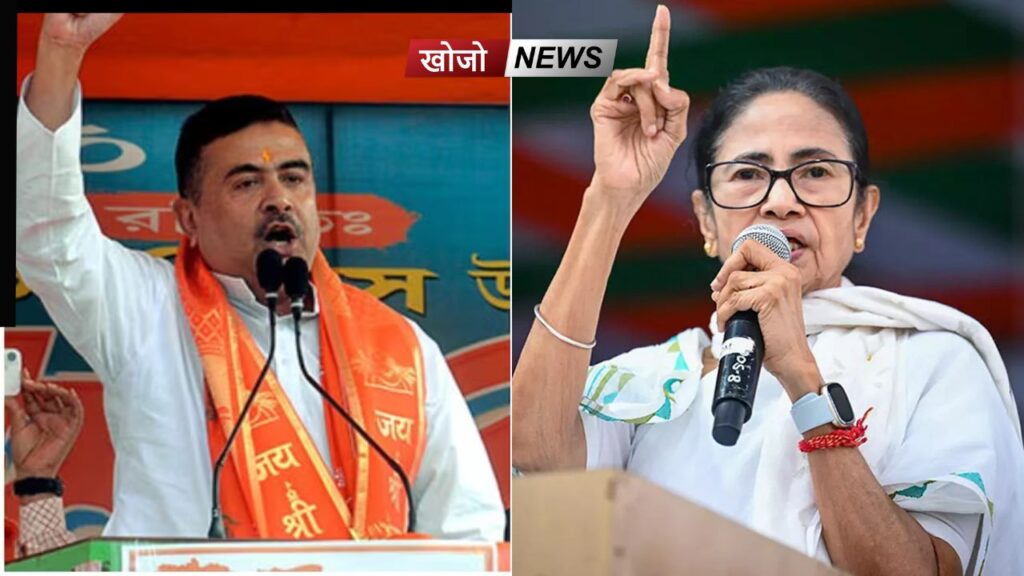
Bhabanipur matters beyond its 2.5 lakh voters. BJP fielding Suvendu Adhikari here — while he simultaneously contests from Nandigram — is a messaging play. The signal is: “We are taking the fight directly to Mamata.” TMC’s counter-signal is Abhishek Banerjee personally taking charge of Nandigram: “We will beat Adhikari on his own turf.”
I’ve seen this pattern repeat across Indian elections — when an opposition makes a bold symbolic move without the organisational backing to win the seat, it creates a brief media narrative but not votes. Mamata won Bhabanipur bypoll with 71.9% in 2021. For Adhikari to flip it, BJP needs both minority and SC voter shifts simultaneously in a south Kolkata constituency where TMC’s booth-level machinery is strongest. The numbers don’t support that outcome.
| Category | TMC (Mamata Banerjee) | BJP (Suvendu Adhikari) |
|---|---|---|
| CM Face | ✅ Mamata — clear, popular, 15-year brand | ❌ No confirmed CM candidate |
| 2021 Seats | 215 out of 294 | 77 out of 294 |
| 2026 Opinion Poll | 184–194 seats projected | 98–108 seats projected |
| Vote Share (Projected) | 41.9% | 34.9% |
| Key Strength | Welfare schemes, women voters, Muslim bloc | North Bengal, Hindu consolidation, central resources |
| Key Weakness | Anti-incumbency, SC voter dissatisfaction, corruption allegations | Internal infighting, no CM face, defector leadership |
| Alliance Status | Contesting mostly alone | NDA — limited allies in Bengal |
| Target Seats | 215+ (supermajority goal) | Flip Jangalmahal + North Bengal swing seats |
3 Things Most Articles Get Wrong About Bengal 2026
1. The Muslim vote is not monolithic for TMC. The VoteVibe poll shows high Muslim satisfaction with TMC — but educated urban Muslim voters, particularly in Kolkata and Howrah, show growing dissatisfaction over governance quality and economic stagnation. AIMIM contesting through the AJUP alliance could peel off even 2–3% of minority votes in specific constituencies, which in close seats is decisive.
2. SC voters are quietly shifting — and nobody is covering it properly. Scheduled Caste voters — who constitute roughly 23% of Bengal’s electorate — show significantly lower satisfaction with TMC than Muslim voters in the same polls. The BJP’s Matua community outreach has been specifically targeted at SC voters in South Bengal border districts. If this shift has deepened since 2021, BJP’s 98-seat projection could be an undercount.
3. The real fight is for 40 swing seats in Jangalmahal — not Bhabanipur. The media obsession with Bhabanipur and Nandigram overshadows the actual election. Jangalmahal — roughly 40 constituencies in Purulia, Bankura, and Jhargram — swings between TMC and BJP based on local issues and adivasi voter sentiment. Whoever wins Jangalmahal in 2026 controls the final seat count margin. That story is almost completely absent from national coverage.
FAQ — What Everyone Is Searching About Bengal 2026
When is the West Bengal election 2026 result?
The West Bengal election 2026 result will be declared on May 4, 2026. Voting takes place in two phases — Phase 1 on April 23 (152 seats) and Phase 2 on April 29 (142 seats). All 294 assembly seats are being counted simultaneously on May 4.
Will Mamata Banerjee win the 2026 West Bengal election?
All major opinion polls project TMC winning between 184–194 seats — well above the 148-seat majority. Mamata Banerjee leads CM preference at 48.5% against BJP’s 33.4%. However, TMC’s vote share has dropped from 47.9% in 2021 to a projected 41.9%, making the seat count more vulnerable than the headline numbers suggest.
Who is BJP’s CM face in West Bengal 2026?
BJP has not officially declared a Chief Minister candidate for West Bengal 2026. Suvendu Adhikari is the de facto face of the BJP’s campaign, contesting from both Nandigram and Bhabanipur. However, the absence of a formally declared CM candidate remains BJP’s single biggest structural disadvantage in a state where voters historically vote for the CM rather than the party.
What is the SIR controversy in West Bengal election 2026?
The Special Intensive Revision (SIR) of electoral rolls deleted approximately 58 lakh names from Bengal’s voter list ahead of the 2026 election. Opposition parties including TMC and Congress alleged that the deletion disproportionately targeted Muslim and minority voters. The Supreme Court intervened, directing 700 judicial officers to adjudicate approximately 60 lakh disputed cases. Around 28 lakh cases were still unresolved as of late March 2026.
How many seats does TMC need to win in West Bengal 2026?
TMC needs a minimum of 148 seats out of 294 to form the government. In 2021, they won 215 seats. Mamata Banerjee has publicly set a target of matching or exceeding 215 seats in 2026 — what the party calls a “supermajority.” Opinion polls project a range of 184–194 seats, suggesting a comfortable win but short of the 2021 supermajority.
After 20 years of watching Indian state elections, here is my honest read on Bengal 2026: Mamata wins. Probably 180–195 seats. Not because she’s unbeatable — she’s not — but because BJP hasn’t solved the fundamental problem of who leads Bengal after Mamata. You can’t defeat a 15-year incumbent with infighting, a defector-led campaign, and no CM face in a state where personality drives every vote. The real story starts on May 5, the morning after results. That’s when the question everyone in Delhi is actually afraid to ask becomes unavoidable: if BJP couldn’t win Bengal in 2026, what does their 2029 map look like?
Also Read Top 10 Most Notorious Gangsters in India