
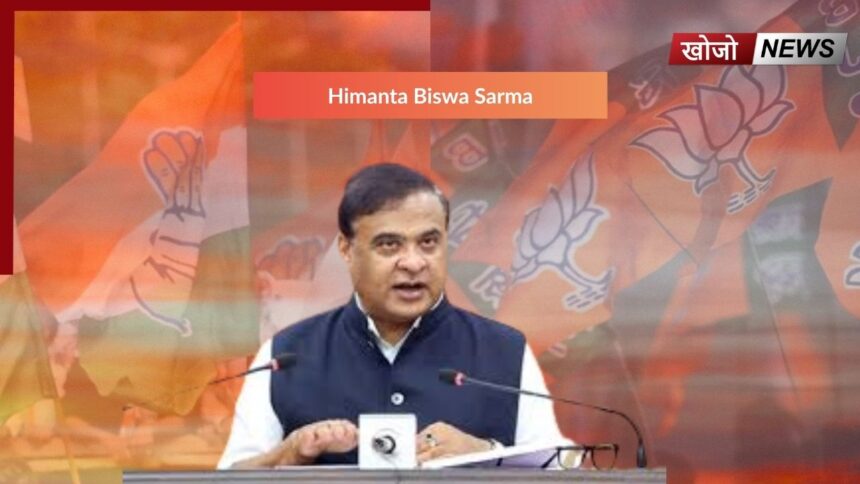
| Full Name | Dr. Himanta Biswa Sarma |
| Date of Birth | February 1, 1969 — Jorhat, Assam |
| Age (2026) | 57 years |
| Education | BA, MA (Political Science) — Cotton College & Gauhati University; LLB; PhD — Gauhati University |
| Current Position | 15th Chief Minister of Assam (since May 10, 2021) |
| Party | BJP (joined August 23, 2015 — formerly Congress) |
| Constituency | Jalukbari — unbeaten since 2001 (6 consecutive wins) |
| Key Role Beyond Assam | Convenor — North East Democratic Alliance (NEDA) |
| Assam Economy Under Him | Fastest-growing Indian state 2020–2025 — 45% growth (RBI data) |
| Wife | Riniki Bhuyan Sarma — media entrepreneur, owns News Live channel |
| Declared Net Worth (2021 affidavit) | ₹17.27 crore |
| 2026 Assam Election Date | April 9, 2026 (single phase) — Result: May 4, 2026 |
In August 2015, Himanta Biswa Sarma walked out of the Congress party that had given him his political career, his cabinet portfolios, and twenty years of power in Assam. Three years earlier, he had called Narendra Modi “anti-Muslim” during a campaign rally. Now he was joining Modi’s party — and within six years, he would become the most dominant Chief Minister in Northeast India. Also read:Top 5 Gangsters Who Became Politicians in India
- From AASU to Congress to BJP — The Journey Nobody Explains Simply
- What He’s Actually Built in Assam — The Numbers Nobody Talks About
- The Controversies — Real, Documented, and Significant
- His Real Power — The Northeast, Not Just Assam
- 3 Insider Facts Most Articles About Himanta Miss
- FAQ — What Everyone Is Searching About Himanta Biswa Sarma
That pivot — from Congress loyalist to BJP’s Hindutva commander in the Northeast — is one of Indian politics’ most complete ideological makeovers. And most people outside Assam have still not fully processed what it means.
From AASU to Congress to BJP — The Journey Nobody Explains Simply
Sarma didn’t start in politics as a BJP man. He started as a student activist in the All Assam Students’ Union — the organisation that led the famous Assam Agitation of 1979–85 against illegal Bangladeshi immigration. That early grounding in Assamese identity politics shaped everything that came after.
He joined Congress, served under CM Tarun Gogoi for 14 years, and held nearly every major cabinet portfolio — Finance, Health, Education, Agriculture, Planning. He was Assam Congress’s election strategist, the man who actually won elections for the party. Industry insiders say he was the real power in the Gogoi government, not Gogoi himself.
The break came when Gogoi pushed to hand Assam’s Congress leadership to his son, Gaurav. Himanta saw a dynasty being built — and spotted the exit. In 2015, he crossed over to BJP, brought several MLAs with him, and handed BJP its first-ever Assam government in 2016. He waited five more years to become CM himself, taking oath in May 2021.
What He’s Actually Built in Assam — The Numbers Nobody Talks About
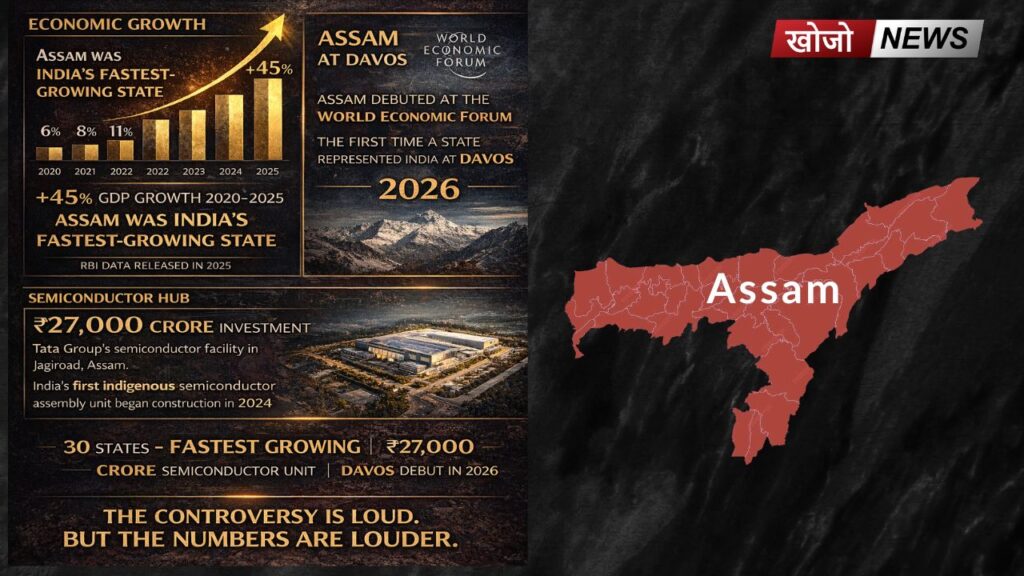
The controversy around Sarma generates so much noise that his actual governance record gets buried. So let’s look at what the data says.
According to RBI data released in 2025, Assam was India’s fastest-growing state between 2020 and 2025, with the economy expanding 45% in five years. In 2026, Assam debuted at the World Economic Forum — the first time the state had any presence at Davos. The Tata Group’s semiconductor facility in Jagiroad — India’s first indigenous semiconductor assembly unit — began construction in 2024, with a ₹27,000 crore investment.
As Health Minister before becoming CM, his COVID response — setting up treatment centres in every district before the first case was detected — earned national praise. He launched Orunodoi in 2020, providing monthly financial assistance to women in poor households. What nobody tells you is that Orunodoi now reaches over 25 lakh families — making it one of India’s largest direct-benefit welfare schemes for women.
The Controversies — Real, Documented, and Significant
Most people get this wrong about Sarma — they either whitewash the controversies or make them the whole story. Both approaches miss the actual picture.
His rhetoric targeting Bengali-speaking Muslims — whom he calls “Miya infiltrators” — has been the defining and most contested feature of his CM tenure. He has framed the 2026 election as a “civilisational battle,” suggested 5 lakh “Miya” votes could be deleted from rolls, and made statements that critics describe as systematically designed to polarise. A formal hate speech complaint was filed against him in 2023 by an independent Rajya Sabha member.
The 2026 campaign added a new layer. Congress alleged Sarma’s wife holds three foreign passports — UAE, Antigua & Barbuda, and Egypt — and owns undisclosed properties in Dubai. Sarma filed defamation cases, called the allegations AI-generated Pakistani interference, and obtained a court injunction prohibiting Congress leaders from making further statements. The allegations remain unresolved as of election day.Also read:Top 5 Gangsters Who Became Politicians in India
His Real Power — The Northeast, Not Just Assam
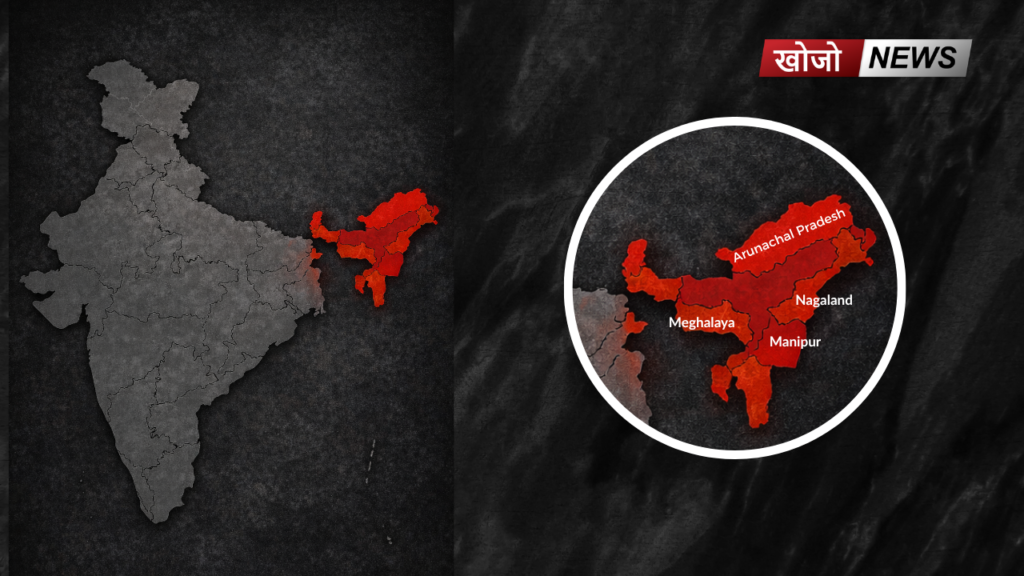
After 20 years of covering Indian state politics, what I find most underreported about Himanta Biswa Sarma is his influence beyond Assam’s 126 assembly seats.
As Convenor of the North East Democratic Alliance (NEDA), he is the BJP’s chief architect of its strategy across all eight northeastern states. When BJP wins in Arunachal Pradesh, Manipur, Meghalaya, or Nagaland — Himanta’s organisational fingerprints are on that result. No other CM in India controls a seven-state political region from within one state’s office.
He is 57. Younger than most national BJP leaders. And he has been positioning himself carefully — speaking nationally, attending Davos, building a governance narrative around economics, not just identity. Whether that trajectory leads to a larger role post-2026 depends entirely on what happens on May 4.
| Category | Congress Phase (2001–2015) | BJP/CM Phase (2015–2026) |
|---|---|---|
| Political Identity | Congress election strategist, secular positioning | BJP’s Hindutva face in Northeast |
| Key Portfolios | Finance, Health, Education, Agriculture | Chief Minister — all portfolios |
| View on Modi | Called Modi “anti-Muslim” in 2014 campaign | Describes Modi as “New India’s key architect” |
| Stand on Immigration | Anti-infiltration as AASU background, moderate as Congress minister | Hardline — “demographic invasion” rhetoric, evictions |
| National Influence | Limited — Assam-state operator only | Controls BJP’s entire 8-state Northeast strategy via NEDA |
| Economy Narrative | Developmental welfare schemes | 45% GDP growth, semiconductor investment, Davos debut |
| Controversies | Louis Berger corruption allegations (BJP targetted him) | Hate speech cases, 2026 passport row, AI-generated video scandal |
3 Insider Facts Most Articles About Himanta Miss
1. His wife owns the news channel that covers him most favourably. Riniki Bhuyan Sarma owns News Live — Assam’s largest Assamese-language news channel. In November 2020, News Live confirmed a contested claim Sarma had made on social media about a political rival. The channel’s editorial alignment with the CM’s political interests is documented and rarely mentioned in national coverage of Sarma.
2. The BJP released a corruption “chargesheet” against him in 2014 — before recruiting him. Before Sarma joined BJP in 2015, the party accused him of involvement in multi-crore scams, including one linked to US firm Louis Berger. Twelve months later, those same accusations disappeared and he was welcomed as a BJP leader. What the headlines miss is that this pattern — attack-then-recruit — is a documented BJP strategy for absorbing influential opposition figures.
3. He lost his very first election — to the person he later defeated to enter politics. Sarma’s 1996 debut at Jalukbari ended in defeat against Bhrigu Kumar Phukan — who had been his own mentor in the AASU. In 2001, he ran again and defeated Phukan. He has held Jalukbari for six consecutive elections since. The loss-then-win story is never told — but it’s the one that explains his relentless political machine-building.
FAQ — What Everyone Is Searching About Himanta Biswa Sarma
Who is Himanta Biswa Sarma?
Himanta Biswa Sarma is the 15th Chief Minister of Assam, serving since May 2021. A PhD holder and former Congress leader who joined BJP in 2015, he is now BJP’s primary political architect across Northeast India and a five-time MLA from Jalukbari, Guwahati.
Why did Himanta Biswa Sarma leave Congress?
He left Congress in 2015 primarily over the party’s move to position Gaurav Gogoi — son of then-CM Tarun Gogoi — as Congress’s next CM face in Assam. Sarma described it as “family-centric politics.” He joined BJP, brought several MLAs with him, and helped BJP win Assam’s government in 2016 for the first time.
What is Himanta Biswa Sarma’s net worth?
His 2021 election affidavit declared total assets of approximately ₹17.27 crore with liabilities of ₹3.51 crore. As of 2026, no updated affidavit has been filed. Congress has alleged undisclosed foreign properties — Sarma has denied these allegations and filed defamation cases against those making the claims.
Will Himanta Biswa Sarma win the 2026 Assam election?
Assam voted in a single phase on April 9, 2026, with results expected May 4. Sarma is contesting from Jalukbari — where he has won six consecutive elections. Most pre-poll assessments give BJP an advantage, though Congress under Gaurav Gogoi has positioned this election as a referendum on Sarma’s polarising style of governance.
What is NEDA and what is Himanta’s role in it?
The North East Democratic Alliance (NEDA) is a BJP-led coalition of political parties across all eight northeastern states. Himanta Biswa Sarma is its Convenor — effectively making him the BJP’s chief political strategist across Assam, Arunachal Pradesh, Manipur, Meghalaya, Nagaland, Mizoram, Tripura, and Sikkim.
Himanta Biswa Sarma is either India’s most effective regional CM of the decade — or the most dangerous polariser in a democracy that cannot afford more polarisation. Most people watching from Delhi or Mumbai have made up their minds based on the Twitter controversy of the week. The reality is more complex, more interesting, and considerably harder to summarise in a single verdict.
What I know after years of watching Indian state politics: leaders this operationally capable don’t stay regional for long. May 4 is not just an Assam result. It’s the first line of his next chapter.