
April 15, 2023. Prayagraj, Uttar Pradesh. A gangster-turned-MP named Atiq Ahmed is being escorted by police to hospital when three men — posing as journalists — pull out pistols and shoot him dead on live television. His brother dies seconds later. The entire thing is captured on camera. It airs on every news channel in India within minutes.
- Atiq Ahmed — The Don Who Contested Against PM Modi
- Mukhtar Ansari — The 5-Time MLA Who Ran His Empire From Jail
- Arun Gawli — “Daddy” of Dagdi Chawl
- Haji Mastan — Bollywood’s Smuggler Don Turned Politician
- Vikas Dubey — The UP Don Who Died Running
- Gangster-Politicians — Then vs Now
- 3 Things Most Articles Get Wrong About Gangster-Politicians
- FAQ — What People Are Searching
That single scene tells you everything about India’s most uncomfortable political reality — that for decades, the line between the criminal underworld and elected government wasn’t just blurred. In some places, it didn’t exist at all.
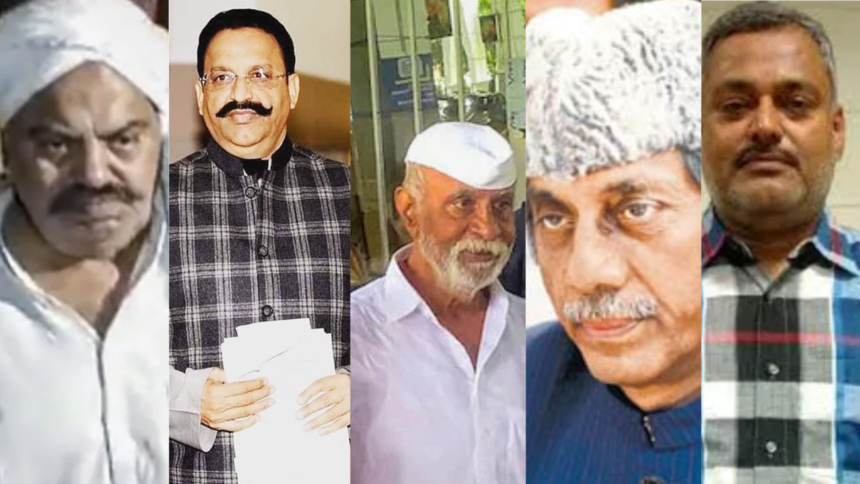
I’ve covered Indian politics for over 20 years. In my experience, the gangster-politician nexus in India is not an accident or an anomaly. It’s a structural feature of how power operates in certain states — especially UP, Maharashtra, and Bihar — where money, muscle, and votes have always been deeply intertwined. Here are the five most striking examples India has ever produced.
Atiq Ahmed — The Don Who Contested Against PM Modi
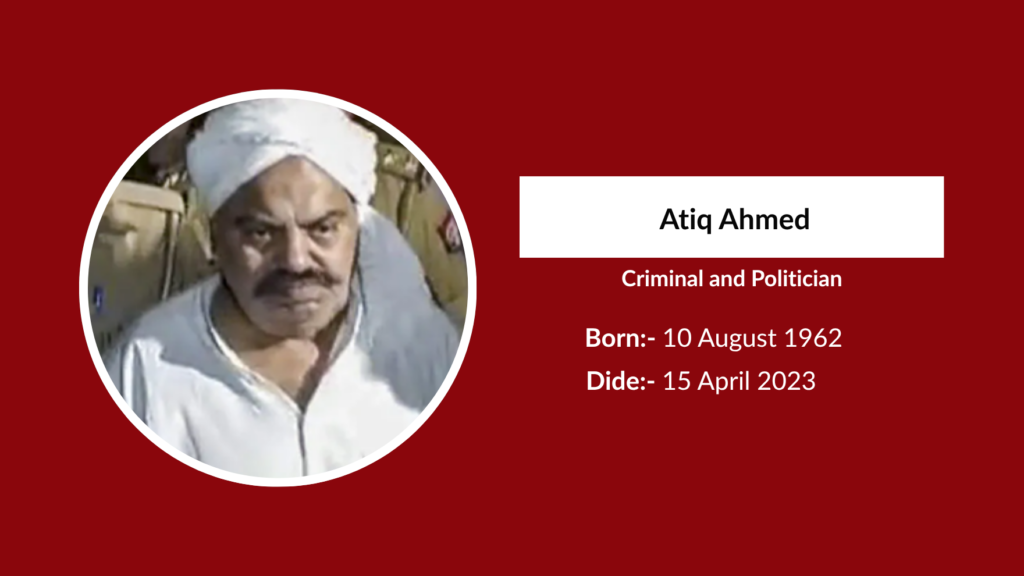
Start with the most dramatic one. Atiq Ahmed was born in 1962 in Allahabad to a family so poor his father drove a horse-cart for a living. By 17, he was accused of his first murder. By 1989, he was an elected MLA. By 2004, he was a Lok Sabha MP. By 2019, he was contesting from Varanasi against Prime Minister Narendra Modi — and got 855 votes.
Think about that trajectory. Coal theft at 17. Parliament at 42. 160+ criminal cases registered against him across four decades. The first person ever booked under the Gangster Act in Uttar Pradesh. He was elected five times as MLA and once as MP, running extortion rackets from prison, orchestrating murders via smuggled mobile phones from Sabarmati Jail, and walking into courts with the kind of confidence that only comes from knowing exactly how much power you still hold.
His end was as cinematic as his career. Shot dead on live TV in police custody. The killers posed as media. The guns were imported Turkish Zigana pistols. Most people get this wrong — Atiq wasn’t just a gangster who entered politics. He used politics as a shield. The ballot box gave him immunity that no amount of criminal muscle alone could have provided.
Mukhtar Ansari — The 5-Time MLA Who Ran His Empire From Jail
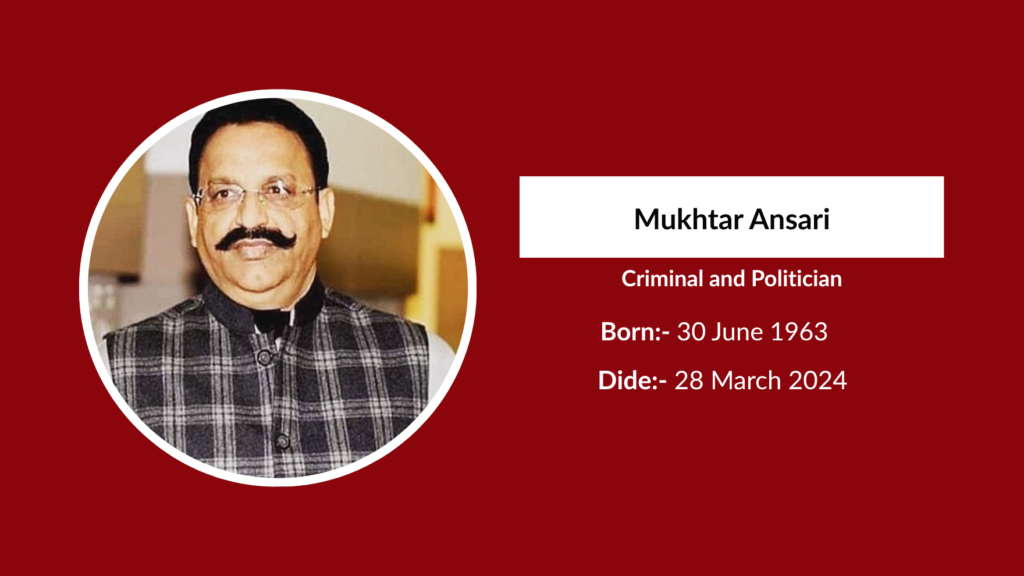
If Atiq Ahmed was the most dramatic, Mukhtar Ansari was the most structurally embedded. Born in 1963 in Ghazipur to a family with genuine nationalist credentials — his grandfather was an early Indian National Congress president — Mukhtar’s first brush with crime came at 15. By 1996, he was an MLA. He won that seat five times.
Nine murder cases registered against him while he was in jail. Nine. Not before prison. While in prison. He ran extortion networks, ordered killings, and coordinated criminal operations across Purvanchal from whatever cell he happened to be in — shifting jails didn’t stop him, it just changed the return address. Properties worth ₹608 crore were seized from his gang in 2020 alone.
He died in Banda jail in March 2024, officially of cardiac arrest, aged 60. His son Abbas is currently an MLA. The dynasty continues.
Arun Gawli — “Daddy” of Dagdi Chawl
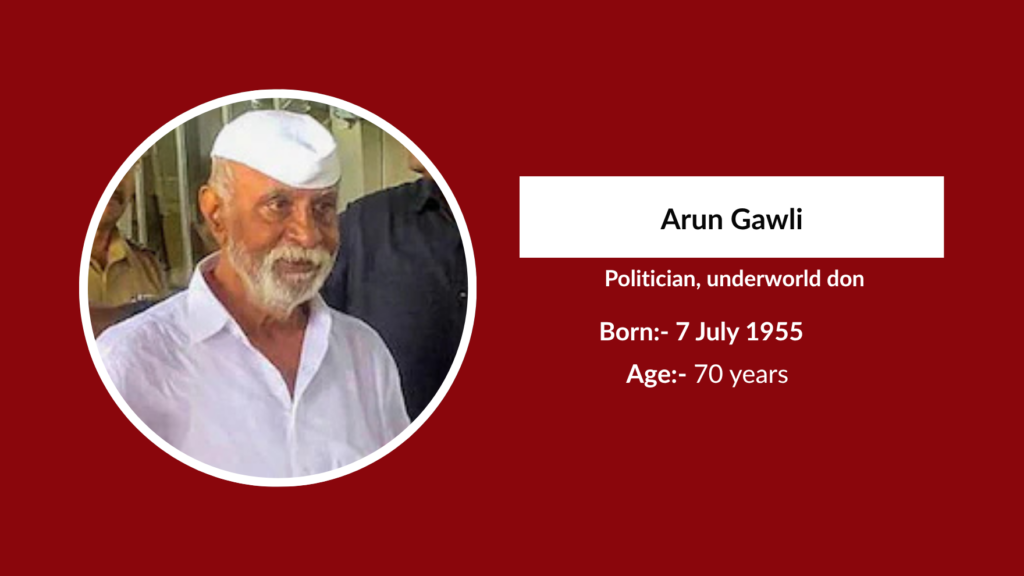
Mumbai’s most beloved gangster-politician is Arun Gawli — known universally as “Daddy.” Born and raised in the Dagdi Chawl neighbourhood of Byculla, he built a criminal empire on extortion and murder while simultaneously cultivating a Robin Hood reputation among the poorest residents of the area. He fed people. He funded local festivals. He settled community disputes.
He also ordered killings.
Gawli founded the Akhil Bharatiya Sena political party and was actually elected as a Mumbai corporator and later as a Maharashtra MLA. He was eventually convicted of the murder of a Shiv Sena politician in 2012 and sentenced to life imprisonment. His political career — running a party, contesting elections, winning seats — happened simultaneously with his criminal empire. Not before. Not after. Simultaneously. That’s the part most coverage glosses over.
Haji Mastan — Bollywood’s Smuggler Don Turned Politician
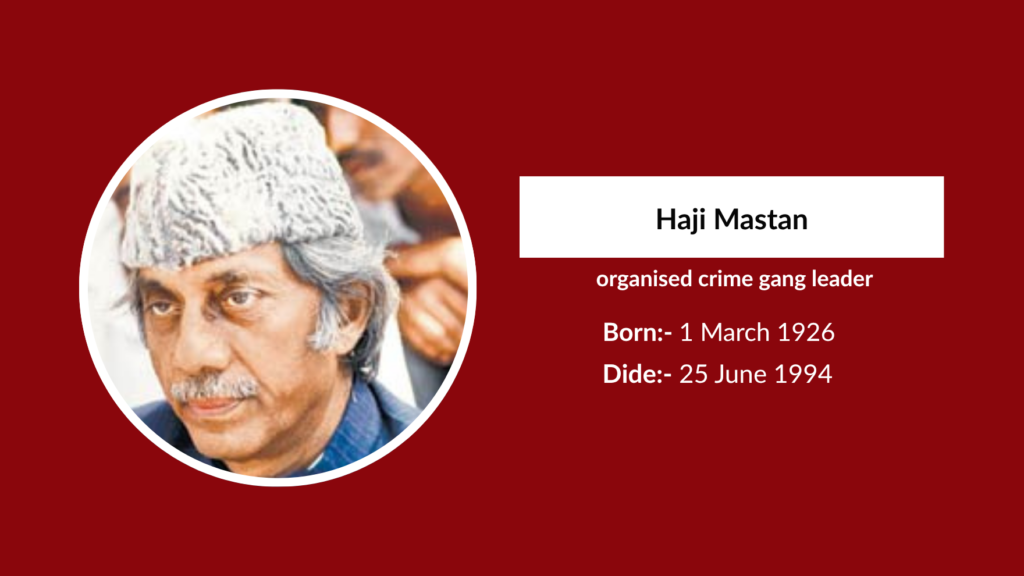
Haji Mastan is the grandfather of the entire genre. Born in Tamil Nadu, he arrived in Bombay as a child and worked the docks before building one of the most lucrative smuggling empires of the 1960s and 70s — gold, silver, electronics, all flowing through Bombay Harbour. He was also deeply embedded in Bollywood financing, personally funding films and cultivating relationships with stars.
Unlike the UP dons who used raw criminal muscle, Mastan operated with unusual sophistication. He minimised violence when unnecessary. He cultivated political relationships rather than replacing politicians. When he eventually moved into formal politics — founding the Inquilab Party and contesting elections in the 1980s — it was almost an afterthought for a man who had been influencing politicians informally for two decades. He died in 1994, mostly retired from crime. His life directly inspired characters in Deewaar,Nayakan, and several other landmark Indian films.Want the full story? Read our complete guide on the
Top 10 Most Notorious Gangsters in India.
Vikas Dubey — The UP Don Who Died Running
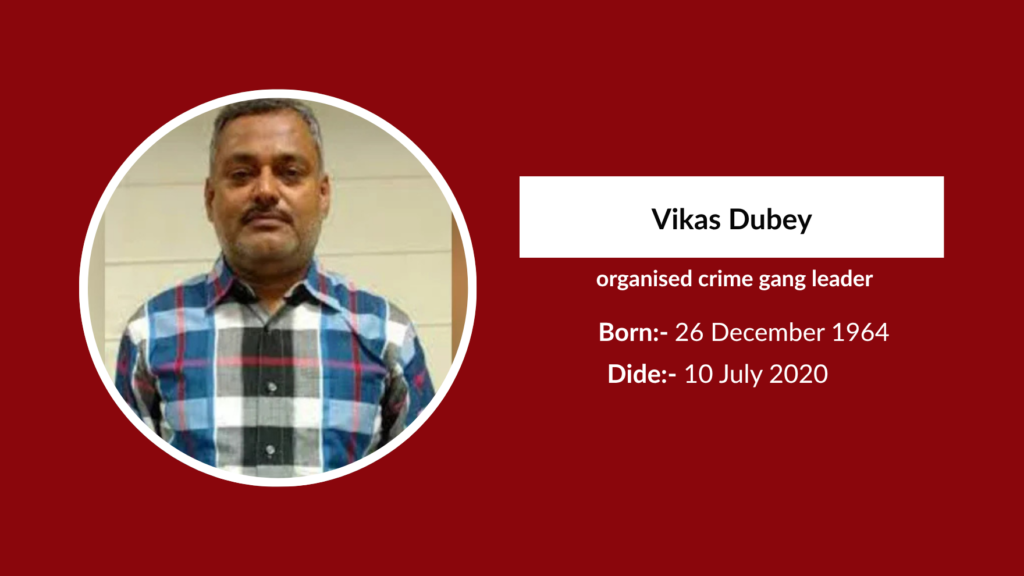
Vikas Dubey deserves the fifth spot because his story crystallises everything wrong with the gangster-politician nexus in modern India. A criminal from Kanpur’s Bikru village, Dubey operated for years under the protection of local political connections that kept him from serious consequences despite dozens of cases against him.
In July 2020, he ambushed and killed eight police officers in a single night — a brazen massacre that shocked the country. He fled. Was caught in Madhya Pradesh eight days later. Was shot dead in what police called an attempted escape during transit back to Kanpur. A Supreme Court-appointed commission investigated whether the encounter was genuine. The political protection that had enabled him for years suddenly vanished the moment he became a liability rather than an asset. That pivot — from useful criminal to disposable problem — is the unspoken logic behind every gangster-politician story on this list.
Gangster-Politicians — Then vs Now
| Category | Old Model (1980s–2000s) | New Model (2010s–2026) |
|---|---|---|
| How They Operated | Physical turf, local muscle, booth capture | Digital extortion, encrypted comms, international networks |
| Political Entry | Contested directly under major party banners | Use family proxies; avoid direct candidacy |
| Voter Support | Robin Hood image — genuinely popular in pockets | Fear-based; diminishing organic support |
| Party Backing | SP, BSP, Congress openly fielded them | Parties maintain distance; back family members instead |
| Law Enforcement | Easily bought or intimidated | NIA, ED, Yogi-era encounters changing the equation |
| Best Example | Haji Mastan, Arun Gawli | Vikas Dubey — used and discarded |
3 Things Most Articles Get Wrong About Gangster-Politicians
1. Voters didn’t vote for them despite their crimes — sometimes because of them. Atiq Ahmed won elections in neighbourhoods where the state had completely failed to deliver justice, contracts, or protection. His violence was, for some voters, the only enforcement mechanism available. Understanding that is not endorsing it. But ignoring it means you don’t understand why these men won.
2. Political parties knew exactly who they were fielding. The SP, BSP, and Congress didn’t accidentally give tickets to men with 100+ criminal cases. They calculated the vote arithmetic and made a choice. The outrage is sometimes performative. The parties knew.
3. The dynasty problem didn’t end when the don did. Mukhtar Ansari is dead. His son Abbas is currently an MLA. Atiq Ahmed is dead. His wife Shaista Parveen remains a fugitive with political connections. The criminal-political family is a more durable institution than any individual don. The men die. The networks don’t.
FAQ — What People Are Searching
Who is the most famous gangster-turned-politician in India?
Atiq Ahmed and Mukhtar Ansari are the most extensively documented. Atiq Ahmed was a five-time MLA, one-time Lok Sabha MP, and the first person booked under UP’s Gangster Act. Mukhtar Ansari was a five-time MLA who ran criminal networks from multiple jails across UP and Punjab simultaneously.
Is Arun Gawli still in jail?
Yes. Arun Gawli was convicted of murder in 2012 and sentenced to life imprisonment. His appeal is pending in the Supreme Court as of 2026. He remains incarcerated, though his Akhil Bharatiya Sena political party technically still exists.
Why do gangsters enter politics in India?
Three reasons. First, elected office provides legal immunity — it is significantly harder to arrest or try a sitting legislator. Second, political connections provide access to government contracts, which are the primary revenue source for most criminal networks. Third, it provides legitimacy — both personal and for the criminal network — that pure underworld status cannot.
Was Haji Mastan ever jailed?
Surprisingly, no — not in any sustained way despite decades of documented smuggling. Mastan was arrested occasionally but never faced serious long-term imprisonment. His political connections, his practice of minimising unnecessary violence, and his early retirement from active crime all contributed to his relatively peaceful final years. He died in 1994 of natural causes.
How does India track criminal records of politicians?
Every candidate contesting Indian elections must submit a sworn affidavit declaring their criminal history to the Election Commission of India. The Association for Democratic Reforms (ADR) analyses and publishes this data before elections. In 2019, over 43% of winning Lok Sabha MPs had declared criminal cases against them in their own affidavits.
The top gangsters who became politicians in India didn’t represent a failure of the system. They were the system — at least in specific geographies, during specific political eras. The good news is that enforcement has genuinely tightened since 2017 in UP. The NIA has more powers. The ED is more active. Encounters happen faster. The bad news is that the underlying conditions that made this nexus attractive — state failure, caste arithmetic, economic desperation — haven’t disappeared. They’ve just found new expressions. The dons change. The dynamic remains.