
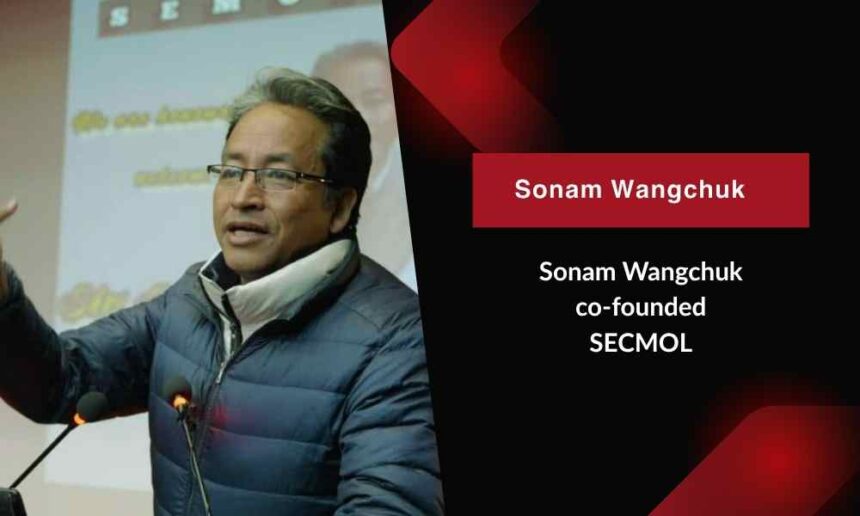
Quick Info: Born: Uleytokpo, Ladakh | Age: 59 Years | Profession: Engineer · Education Reformer · Innovator · Climate Activist | Known For: SECMOL, the Ice Stupa, inspiring “Phunsukh Wangdu” in 3 Idiots, Ramon Magsaysay Award
- Early Life — Homeschooled in a Village With No School
- Education — From NIT Srinagar to Earthen Architecture in France
- SECMOL & Education Reform — The Real Work Behind the Film
- The Ice Stupa — Engineering Glaciers to Fight Climate Change
- Fame, the 3 Idiots Connection & Major Awards
- The Ladakh Movement & 2025–26 Detention
- The Release — And Where Things Stand in 2026
- Lesser Known Facts About Sonam Wangchuk
- 3 Things Most Articles About Sonam Wangchuk Miss
- FAQ — What People Are Searching About Sonam Wangchuk
| Full Name | Sonam Wangchuk |
| Popularly Called | The real-life inspiration for “Phunsukh Wangdu” / “Rancho” in 3 Idiots |
| Profession | Engineer · Education Reformer · Innovator · Environmentalist · Climate Activist |
| Date of Birth | September 1, 1966 |
| Age (as of 2026) | 59 Years |
| Birthplace | Uleytokpo (near Alchi/Leh), Ladakh, India |
| Nationality | Indian |
| Religion | Buddhist |
| Father | Sonam Wangyal — politician from Leh |
| Mother | Tsering Wangmo — homeschooled him until age 9 |
| Education (1) | B.Tech, Mechanical Engineering — NIT Srinagar (1987) |
| Education (2) | Earthen Architecture — CRAterre, France |
| Wife | Gitanjali J. Angmo — social entrepreneur, HIAL co-founder |
| Children | Two children |
| Founded (1988) | SECMOL — Students’ Educational and Cultural Movement of Ladakh |
| Founded (2017) | HIAL — Himalayan Institute of Alternatives, Ladakh (with Gitanjali) |
| Signature Innovation | The Ice Stupa — artificial glaciers storing winter water for spring |
| Other Work | Ladags Melong (magazine, editor 1993–2005) · Operation New Hope · Ladakh Voluntary Network |
| Top Award | Ramon Magsaysay Award (2018) — “Asia’s Nobel Prize” |
| Other Honours | Rolex Award for Enterprise (2016) · Global Award for Sustainable Architecture (2017) · Ashoka Fellowship (2002) |
| 2025–26 Event | Detained under NSA (Sep 2025) during Ladakh statehood protests · released March 14, 2026 |
When Aamir Khan’s character in 3 Idiots told a generation of Indian students to chase excellence instead of marks, millions assumed “Phunsukh Wangdu” was a screenwriter’s invention. He wasn’t. He was inspired by a real engineer from a Ladakhi village so remote it had no school — a man who taught himself, reformed an entire region’s education system, and built artificial glaciers to fight climate change in the Himalayas.
That man is Sonam Wangchuk. But in 2025, his story took a turn no film would have scripted: the celebrated reformer and Ramon Magsaysay laureate was arrested and held for six months under the National Security Act after protests in Ladakh, before being released in March 2026. This is his full biography — the innovation, the fame, and the detention that made global headlines.
Early Life — Homeschooled in a Village With No School
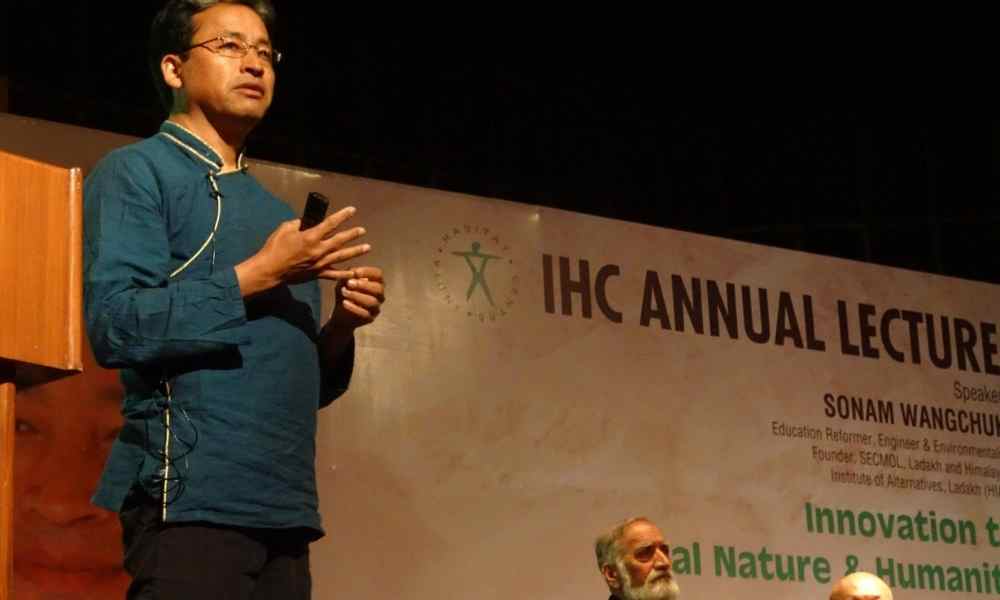
Photo: Sonam Wangchuk | Facebook/Gitanjali J. Angmo
Sonam Wangchuk was born on September 1, 1966, in Uleytokpo, a small village near Alchi in the Leh region of Ladakh. His father, Sonam Wangyal, was a politician from Leh; his mother was Tsering Wangmo. The defining fact of his childhood is startling: his village had almost no access to formal schooling, so he was educated entirely at home by his mother until the age of nine.
This unusual start shaped his entire philosophy of education. Learning, for the young Wangchuk, was initially something tied to his own language, his own surroundings, and his mother’s teaching — not an alien system imposed from outside. When he was finally sent to formal school in Srinagar, he reportedly faced language barriers and discrimination, struggling in a system taught in languages and contexts foreign to a Ladakhi child. That painful contrast — between joyful home learning and a punishing formal system — became the seed of his life’s work.
His determination was evident early. Facing obstacles, including differences with his father over his choice of studies, he financed part of his own education by teaching other students. As he later recalled, within a few months of tutoring he had earned enough to fund the next couple of years of his studies — an early lesson in self-reliance that would define everything he built.
Education — From NIT Srinagar to Earthen Architecture in France
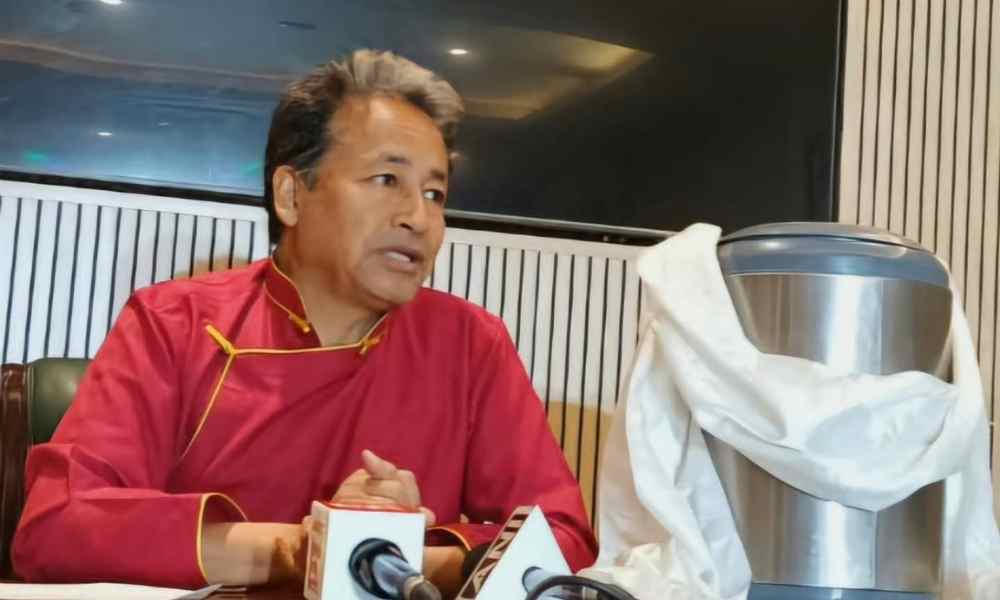
Photo: Sonam Wangchuk | Facebook/Gitanjali J. Angmo
Sonam Wangchuk’s formal education culminated in a B.Tech in Mechanical Engineering from the National Institute of Technology (NIT) Srinagar, which he completed in 1987.
His path there was not smooth. After language struggles in the Kashmiri school system, he is said to have travelled to Delhi to plead his case for admission to a Kendriya Vidyalaya — a determination to be educated that overrode every obstacle in his way. The engineering degree gave him the technical foundation that would later let him invent the Ice Stupa and design solar-heated buildings; the struggles to obtain it gave him his lifelong conviction that education must be made relevant to the learner rather than imposed upon them.
Years later, he pursued further study in Earthen Architecture at CRAterre in France — a specialisation in building with earth and traditional, sustainable materials. This expertise directly informed the eco-friendly, solar-heated, fossil-fuel-free campus he would build for SECMOL. The combination of mechanical engineering and earthen architecture is the technical DNA behind nearly every practical innovation of his career.
SECMOL & Education Reform — The Real Work Behind the Film
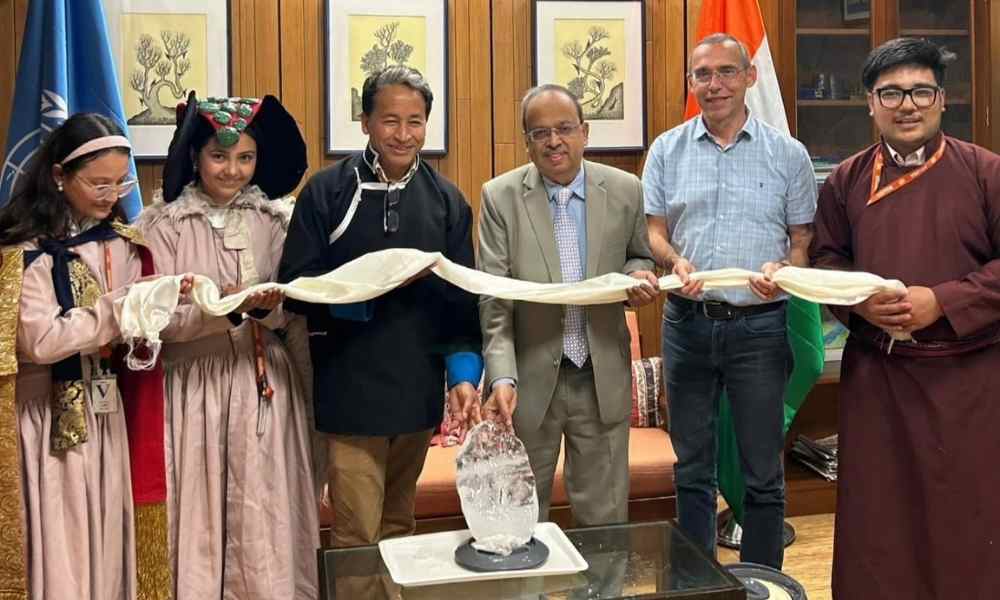
Photo: Sonam Wangchuk | Facebook/Gitanjali J. Angmo
In 1988, the year after graduating, Sonam Wangchuk co-founded SECMOL — the Students’ Educational and Cultural Movement of Ladakh — alongside his brother and five peers. It is the institution that defines his legacy far more than any film ever could.
SECMOL was a direct response to a crisis: Ladakhi students were failing government school exams in catastrophic numbers, defeated by a curriculum taught in unfamiliar languages and disconnected from their lives. Wangchuk’s solution was to rethink education entirely — shifting from what he called “chalk, talk and stick” to child-centred, joyful, meaningful, and contextual learning rooted in local knowledge and real-life skills.
The results were extraordinary and measurable. Through SECMOL and the collaborative Operation New Hope (launched 1994 with the government and villagers), the pass rate in Ladakh’s matriculation exams rose from around 5 percent in 1996 to roughly 75 percent by 2015. This is the genuine achievement that the fictional “Phunsukh Wangdu” only gestured at — a real, documented transformation of an entire region’s educational outcomes.
The SECMOL campus itself became a statement of his philosophy: solar-heated, built with low-cost traditional techniques and passive solar architecture, it stays warm even in -30°C temperatures without fossil fuels, and won the International Terra Award in 2016. Wangchuk also founded and edited Ladakh’s only print magazine, Ladags Melong (1993–2005), and helped shape regional education and tourism policy.
The Ice Stupa — Engineering Glaciers to Fight Climate Change
Sonam Wangchuk’s most internationally celebrated innovation is the Ice Stupa — a brilliantly simple solution to one of the Himalayas’ most pressing problems.
Ladakh is a high-altitude cold desert where farmers face a cruel mismatch: there is plenty of water in winter (which simply flows away or freezes uselessly) but a severe shortage in spring, exactly when crops need it most for planting. Wangchuk’s idea, prototyped in late 2013, was to pipe winter meltwater and spray it into the freezing air so it freezes into towering, cone-shaped “stupas” of ice — artificial glaciers.
Because of their conical shape, these ice stupas have minimal surface area exposed to the sun, so they melt slowly and last well into spring and early summer — releasing water precisely when farmers need it. It is a piece of appropriate-technology genius: low-cost, gravity-powered (no pumps), locally buildable, and directly responsive to climate stress in the mountains. The Ice Stupa concept has since been studied and replicated in other mountain regions of the world, from Switzerland to Central Asia.
The Ice Stupa, more than anything else, established Wangchuk’s global reputation as an innovator who solves real problems with elegant, sustainable, indigenous solutions — the philosophy he summarises as finding local answers rather than importing foreign tools to mountain problems.
Fame, the 3 Idiots Connection & Major Awards
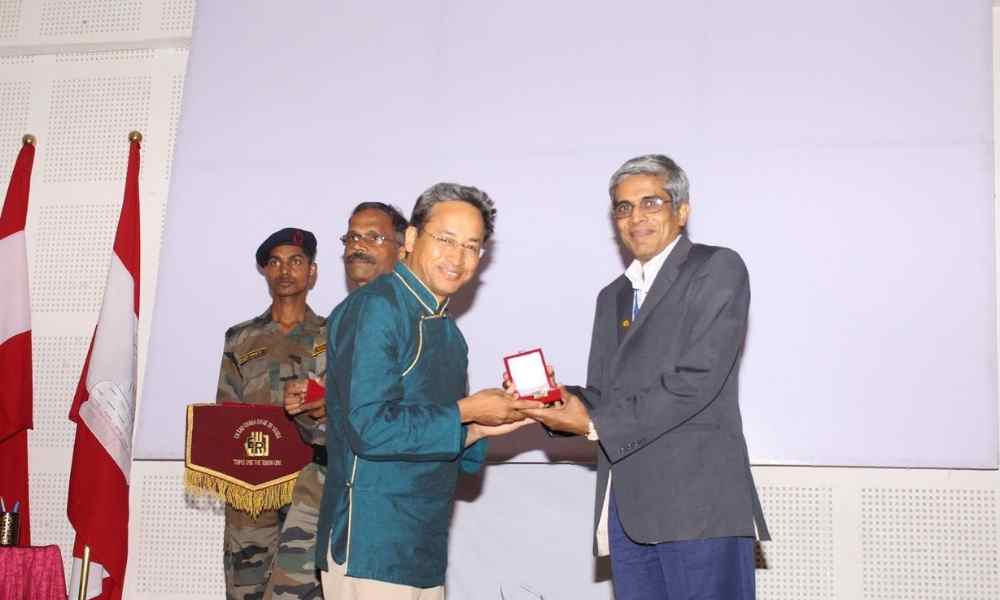
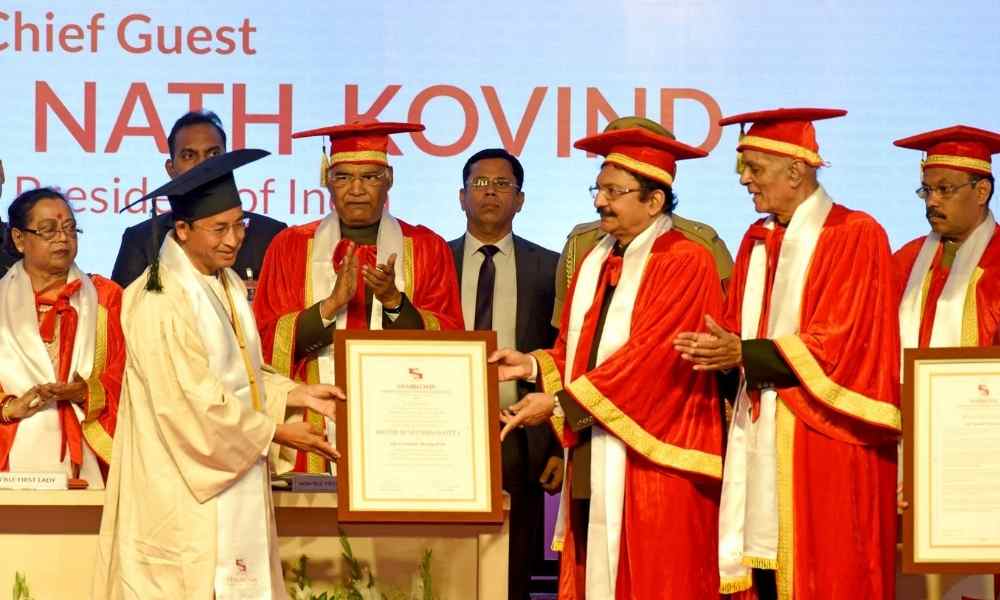
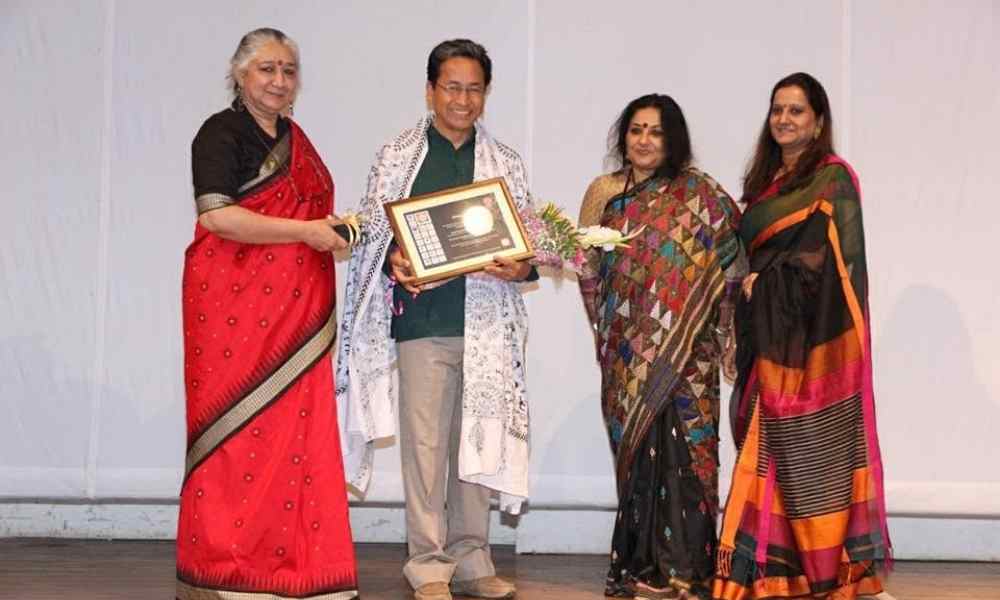
Sonam Wangchuk is widely described as a real-life inspiration behind Aamir Khan’s character “Phunsukh Wangdu” (Rancho) in the blockbuster film 3 Idiots (2009) — the connection that made his name famous to ordinary Indians
While the film is a fictional drama, its central message — that education should ignite curiosity and solve real problems rather than mass-produce exam-passing robots — is precisely Wangchuk’s life philosophy, and the character’s innovative, anti-rote-learning spirit clearly echoes his work. The association turned a Ladakhi education reformer into a household name across India.
His real recognition, however, came through a remarkable list of honours that have nothing to do with cinema. He received the Ashoka Fellowship for Social Entrepreneurship (2002), the Rolex Award for Enterprise (2016), the Global Award for Sustainable Architecture (2017), and — most prestigiously — the Ramon Magsaysay Award in 2018, often called “Asia’s Nobel Prize,” for his work reforming education and pioneering sustainable innovation in Ladakh. These awards establish him as a globally significant figure in education and sustainability, independent of his pop-culture fame.
The Ladakh Movement & 2025–26 Detention
In recent years, Sonam Wangchuk became the most prominent voice in a long-running campaign for Ladakh — and in 2025, that activism led to his detention.
Since Ladakh became a Union Territory without a legislature in 2019, a movement has demanded statehood for the region and its inclusion under the Sixth Schedule of the Constitution, which provides protections for tribal areas. Wangchuk, framing his activism in Gandhian terms and linking it to climate and ecological protection, became the campaign’s best-known figure, undertaking hunger strikes and a “Delhi Chalo Padyatra.”
The events of September 2025 are best stated neutrally, as the facts remain contested. Violent protests erupted in Leh during the statehood campaign, leaving four people dead and dozens injured. On September 26, 2025, Wangchuk was arrested and detained under the National Security Act (NSA), 1980, and moved to Jodhpur Central Jail. The Government of India’s Ministry of Home Affairs and the Ladakh administration attributed the violence in part to “provocative” statements by Wangchuk and stated he had engaged in “activities prejudicial to the security of the State,” asserting the detention was lawful. Around the same time, the FCRA foreign-funding licence of his organisation SECMOL was cancelled.
Wangchuk consistently and firmly denied the allegations, describing his movement as peaceful and Gandhian and the detention as an attempt to silence it. His wife, Gitanjali J. Angmo, filed a habeas corpus petition in the Supreme Court (represented by senior advocate Kapil Sibal) challenging the detention as illegal. The case drew national attention and support for Wangchuk from across civil society, academics, and opposition figures.
The Release — And Where Things Stand in 2026
After roughly six months in detention, Sonam Wangchuk was released on March 14, 2026, when the Ministry of Home Affairs revoked his NSA detention “with immediate effect” after “due consideration,” reaffirming its stated commitment to peace, stability, and dialogue in Ladakh.
On March 22, 2026, he returned to Leh after 170 days away. Speaking to reporters, he struck a notably conciliatory tone — saying he hoped “a new sun will rise for the cause,” expressing willingness to engage in dialogue, and stating he did not wish to hold bitterness even while maintaining that mistakes had been made during his detention. He described the time in jail as both a personal opportunity for reflection and, from a justice standpoint, a series of wrongs that should never happen to anyone.
In a May 2026 joint interview with Gitanjali Angmo, the couple detailed the ordeal — Wangchuk likening his arrest to being “kidnapped by a gang” and both describing the difficulties of the months apart. As of mid-2026, Wangchuk is back in Ladakh, the broader questions about the region’s statehood demand remain unresolved, and he has signalled a continued but dialogue-oriented commitment to the cause.
Lesser Known Facts About Sonam Wangchuk
- He was homeschooled by his mother until age 9 because his Ladakhi village had no school — the origin of his entire education philosophy.
- He financed part of his own education by teaching other students, earning enough in a few months to fund years of study.
- He holds a B.Tech in Mechanical Engineering from NIT Srinagar (1987) and studied Earthen Architecture in France.
- He co-founded SECMOL in 1988 with his brother and five peers — the year after he graduated.
- Under his reforms, Ladakh’s matriculation pass rate rose from ~5% in 1996 to ~75% by 2015.
- He prototyped the first Ice Stupa in late 2013 — artificial glaciers that release water to villages in spring.
- His solar-heated SECMOL campus stays warm at -30°C without fossil fuels and won the International Terra Award (2016).
- He founded and edited Ladags Melong, Ladakh’s only print magazine, from 1993 to 2005.
- He is widely cited as a real-life inspiration for “Phunsukh Wangdu” in 3 Idiots (2009).
- He won the Ramon Magsaysay Award in 2018 — often called “Asia’s Nobel Prize.”
- His wife Gitanjali J. Angmo co-founded HIAL with him in 2017 and led his Supreme Court legal challenge in 2025–26.
- He was detained under the NSA for ~6 months (Sep 2025 – Mar 2026) and, on release, said he holds no bitterness and is open to dialogue.
3 Things Most Articles About Sonam Wangchuk Miss
1. The “3 Idiots inspiration” tag actually undersells him. Being linked to a Bollywood blockbuster made Wangchuk famous, but it also flattened him into a feel-good movie reference. The reality is more impressive than the fiction: a documented rise in exam pass rates from 5% to 75%, a globally replicated climate technology, a Magsaysay Award, and an entire reimagined model of mountain education. The film gestured at a hero; the real man did the actual, measurable work. Leading with “3 Idiots” buries the genuine achievements beneath a pop-culture headline.
2. His engineering and his activism are the same project, not two separate careers. Most coverage treats “Wangchuk the innovator” (Ice Stupa, SECMOL) and “Wangchuk the activist” (Ladakh statehood protests) as distinct phases. They are not. Both flow from a single conviction: that mountain communities deserve solutions, education, and protections designed for their reality rather than imposed from the plains. The Ice Stupa protects Ladakh’s water; the statehood movement seeks to protect its ecology and people. It is one continuous mission expressed through different tools — engineering, education, and finally protest.
3. The 2025–26 detention is genuinely contested — and an honest article reports both sides rather than picking one. This is a politically charged episode. The government stated the detention was lawful and tied to provocative statements and security concerns; Wangchuk and his supporters maintained the movement was peaceful and the detention an attempt to silence dissent. The Supreme Court case and the eventual revocation of the detention are facts; the underlying disagreement about who was right is not settled. The responsible thing is to lay out the documented facts and both positions, and let readers form their own view — not to convert a contested political event into a one-sided narrative.
For the story of the woman who led the legal fight for his release, read: Gitanjali J. Angmo — Sonam Wangchuk’s Wife: The Woman Who Took On the State.
FAQ — What People Are Searching About Sonam Wangchuk
Who is Sonam Wangchuk?
Sonam Wangchuk (born September 1, 1966, in Ladakh) is an Indian engineer, education reformer, innovator, and climate activist. He co-founded SECMOL to reform Ladakh’s education system, invented the Ice Stupa (artificial glaciers), co-founded HIAL, and won the Ramon Magsaysay Award in 2018. He is widely cited as a real-life inspiration for the character Phunsukh Wangdu in the film 3 Idiots. In 2025–26 he was detained for six months under the National Security Act during Ladakh’s statehood movement, before being released in March 2026.
Is Sonam Wangchuk really the inspiration for 3 Idiots?
Sonam Wangchuk is widely described as a real-life inspiration behind Aamir Khan’s character “Phunsukh Wangdu” (Rancho) in 3 Idiots (2009). While the film is a fictional drama, its core message — that education should foster curiosity and solve real problems rather than rote memorisation — directly mirrors Wangchuk’s life philosophy and his actual education-reform work in Ladakh through SECMOL.
What is the Ice Stupa invented by Sonam Wangchuk?
The Ice Stupa is an artificial glacier invented by Sonam Wangchuk, first prototyped in late 2013. It stores wasted winter water by freezing it into tall cone-shaped towers of ice. Because the conical shape minimises sun exposure, the ice melts slowly and releases water in spring — exactly when Ladakhi farmers need it for planting. It is a low-cost, gravity-powered climate solution now studied and replicated in mountain regions worldwide.
Why was Sonam Wangchuk arrested?
Sonam Wangchuk was detained under the National Security Act on September 26, 2025, after violent protests in Leh during a campaign for Ladakh statehood and Sixth Schedule protections left four people dead. The government attributed the violence partly to “provocative” statements by Wangchuk and said he engaged in activities prejudicial to state security. Wangchuk firmly denied this, calling his movement peaceful and Gandhian. He was released on March 14, 2026, when the government revoked the detention.
Is Sonam Wangchuk released now?
Yes. Sonam Wangchuk was released on March 14, 2026, after roughly six months in detention, when the Ministry of Home Affairs revoked his NSA detention “with immediate effect.” He returned to Leh on March 22, 2026, after 170 days away, saying he held no bitterness and was open to dialogue on Ladakh’s issues. His wife Gitanjali Angmo’s Supreme Court petition had challenged the detention throughout.
Sonam Wangchuk grew up in a village with no school, taught himself with his mother’s help, financed his own education by teaching others, and went on to lift an entire region’s exam pass rate from 5% to 75%, invent a climate technology now copied around the world, and earn Asia’s highest humanitarian honour. The “3 Idiots inspiration” label is the smallest true thing about him.
His 2025–26 detention added a difficult, contested chapter to that story — one that remains politically charged and whose underlying questions about Ladakh are far from settled. But the throughline of his life is unmistakable: a conviction that mountain people deserve solutions built for their own reality. Whether through an ice tower in the desert, a solar school that defies -30°C, or a peaceful march to Delhi, Sonam Wangchuk has spent nearly four decades insisting that the answers to Ladakh’s problems should come from Ladakh itself.